Writing a Book is Hard #amwriting

Writing a book is hard. Wait, let me clarify: writing a good book is hard. The thing to remember is that people do it. People actually publish books, good ones–even while working full-time, even while raising families. Publishing a good book is doable and worthwhile. But it takes

A

Lot

Of

Work.

Start Your Book

First you need to come up with a story, something unique that can grab readers (and agents) in an elevator pitch of 15 words or less. Yes, you’ll need to write that elevator pitch and synopsis, but first the book…

You must decide how to start.

If you’re a natural-born plotter and/or smart enough to learn how, you plot your story in great detail before beginning to write the actual book.

On the other hand, if you’re a pantser, your book-writing journey will be much longer. If, like me, the only way you can come up with story ideas is by letting them flow organically while writing, so be it.

In other words, pantsers:

  • write a lot of pages just to get an understanding of the story and characters.
  • Read through all that pre-writing, take notes, plot everything in a way that makes sense.
  • Then write the real first draft.

-You create characters, each with their own quirks, histories, fears, goals, and desires–and conflicts, especially conflicts, both external and internal.

-You write all three acts of your book, yes, all three, even when you reach act two and realize, whoah, a book is big, so super big, way bigger than the original story idea I had. At this point you remind yourself that you are not a bad writer, you are not a bad writer, you are not–that the first draft is always bad. Verify this by reading what all published authors say. (ALL writers say their first drafts are bad.)

-You write all the scenes for your book, all of them, around a hundred. You ensure that each scene has a dramatic arc and an emotional arc and that the pacing is right–not too slow, not too rushed.

-You make sure your book falls within the standard word count for your genre, aware that agents and publishers are more receptive to first books with word counts that fall into the lower range. You remain calm as you logically deduce that the reason publishers prefer shorter books from first-time authors is so they don’t waste as much money on you in case your book bombs.

Revise Your Book

  • You rearrange all the scenes in your novel until the narrative makes sense. You add scenes, delete scenes, and completely rewrite scenes.
  • You make sure dialogue for each and every character is distinctive and packs a punch.
  • You craft your story in such a way that it’s not too ambiguous but also not too on the nose because you’re aware readers like figuring out things on their own.
  • While editing your book, you take multiple passes through it, each time focusing on only one or two elements to avoid becoming mired in an overwhelming mass of details that will make you. . .

Losing mind - businesswoman

Maintain Sanity

Balance is everything. While writing and editing, you maintain your sanity through:

  • social interaction
  • commiserating with fellow writers
  •  physical exercise
  • spiritual whatever.

Work with a Critique Partner (CP)

After you’ve written, revised, and brought out the shine in all elements of your novel, you hand your manuscript over to another person, preferably a critique partner (CP). But first, you must find said CP. This means putting yourself out there on social media, websites, local writers’ groups, workshops, wherever you can find fellow writers/potential CPs who understand your genre and are willing to swap full novel critiques.

You must read other people’s works in progress (WIPs) so they will read yours. It’s a fair exchange, and the time is well spent. When critiquing someone else’s work, not only are you helping out another writer, you are learning a LOT about what makes a manuscript work.

You make more changes to your novel based on CP feedback. 🙂

Work with Beta Readers

You send your manuscript out to beta readers. Again, you need to do the legwork first. Interact with fellow book lovers on blogs, Goodreads, wherever readers of your genre dwell in the wild. When your book is ready, summon the courage to ask those people if they’d like to read and provide feedback on your novel.

Make further revisions to your novel based on beta reader feedback. 🙂

Read, Read, Read

All the while, you read as many published novels as you can, not only because you love to read, but also to gain an understanding of what’s being published in your genre, what the trends are, and to get ideas on what you’d like to strive for and avoid in your own writing.

Research Literary Agents

In between all the writing, editing, and networking, you also research potential literary agents. And they can’t be just any agents. They must be agents who: represent the kinds of books you write, are good at what they do, are open to queries. Which means:

  • Every time you pick up a novel, you read the acknowledgment page (often it’s the first page you turn to), keeping an eye out for agent shout-outs.
  • You visit promising literary agents’ Twitter accounts and blogs, agency websites, and check out their #MSWL (manuscript wish lists). And you do web searches for their interviews to ensure they’re looking for what you’re writing.
  • You create a free account on querytracker.net to check out what other querying writers are saying about agents you’re interested in.
  • You study agents’ submission guidelines and follow them to a T, fully aware (without letting it freak you out) that literary agents are so inundated they’ll look for any reason to reduce their submission load. This means that every detail of the query letter, email, manuscript format, synopsis, etc. that you send prospective agents must exactly conform to their specifications.

Network with Other Writers

You make friends in the writing community who will console you when you’re overwhelmed with how hard it is to write a book, especially when you need to write a synopsis, which means summing up your entire novel up in 1-5 pages. That is really hard.

Follow Your Favorite Authors (not required but, oh, so fun)

Another thing you’re probably doing—though not specifically required—is daydreaming and getting ideas for your own writing career by following your favorite authors; seeing what they’re up to on their blog and tumblr, Twitter, Instagram, SnapChat, Pinterest,Vine, Goodreads, Facebook, maybe even meeting them at book signings (a thrill every writer and reader should experience).

Maintain an Online Presence

While writing, revising, networking, reading,and researching agents, you also maintain your own blog and social media accounts, hoping that by developing an online presence as an author you’ll look legit to future agents, publishers, and fans.

Whew, good luck. Write and publish that book!

–Eve Messenger


The Girl with All the Gifts – Black Characters Matter


19418277

Hello, fellow book junkies! Now that I’m on summer break, I’ve been going like gangbusters with writing and editing three YA novels. One of my projects is a YA fantasy about a girl who can vanish into shadows and longs to see the world but can’t because her family keeps to themselves. Then she learns the shocking reason why.

I recently made a big change in the second draft of that story. It was originally set in the distant past, but I switched it to a couple of hundred years in the future, and now it’s working much better and has an interesting new vibe. I likely got the idea for the time switch from two books I’ve read recently/am reading: Ready Player One and The Girl With All the Gifts, the latter being an adult zombie story with a POV that blew my mind.  (Beware, it gets scary as sh*t.)

The movie version of The Girl With All the Gifts hit UK theaters this week (maybe the US too, but I can’t seem to find it). As a reader who fell head over heals for the character Ms. Justineau, imagine my dismay when I discovered how the producers decided to cast her role.

In the book, Ms. Justineau is depicted as a 40s-ish dark-skinned black woman, in my imagination, kind of like Teyonah Parris:

In the movie, this is how the producers cast her:

Gemma-Arterton02.jpg

?!!? I mean, come on. Nothing against Gemma Arterton, who’s probably a fine actress and certainly is lovely but, well, she’s 30 and so white. Honestly, I felt betrayed and sad, as if the fictional 40-year-old black Ms. Justineau  I adored has been erased.

Other notes about casting for this movie: Glen Close was a good choice, I think, to play the sort of mad scientist Dr. Caldwell, and it seems the movie producers decided to try and balance the color scales by casting the little girl Melanie, who in the book is white, with a black actress.

Okay, but . . .

Ms. . .

Justineau. . .

— Eve Messenger


Vicious, Inspiration & Cinderella w/a Girl

I’m still madly in love with V.E. Schwab’s writing. Just finished reading Vicious, and what that woman did to the superhero genre. . . I hardly knew who to root for. It was crazy. I got so invested in the story and characters.

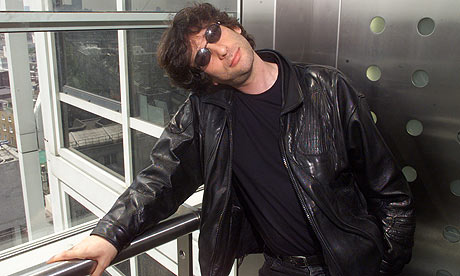
Speaking of Victoria V.E. Schwab, did you know that she wears a bracelet emblazoned with the letters WWNGD? The letters stand for “What Would Neil Gaiman Do?” Just as Gaiman is her role model, Schwab is mine. She isn’t afraid to write books in different genres, she works hard, she is gracious, and she is successful. That is why I wear this every day.

WWVSD

My “WWVSD” bracelet inspires and reminds me to work tirelessly toward my goal of becoming a successful published author.

Over the past few years I’ve written four novels. The fifth one (five has always been my lucky number)–which recently started writing–has grabbed hold of me and won’t let go. In a previous post  I mentioned I’d like to read a story in which Cinderella ends up, not in a cliched relationship with Prince Charming, but in a loving relationship with his dark, lovely, girl-knight sister. Well, guess what? Now I’m writing it! Ironically, I’m not a big romance reader, so in addition to romance there’s magic, a ghost, a betrayal, an invasion, and the coolest council of women magicians who hold even more power than the royal house. Whenever I write about the council it’s like stepping into Beyonce’s song, Run the World (Girls). Am having so much fun with this novel.

Alrighty, now I’d better get back to work. Yeah, that’s where I’m typing this–sorry, boss.

–Eve Messenger

Poor, neglected blog. Time to check in.

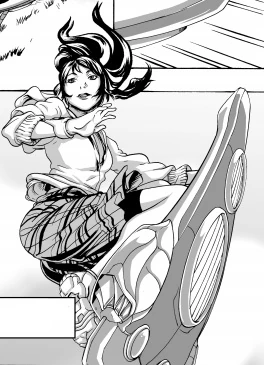
I wish I were hoverboarding right now above the river, the wilderness, and the Rusty Ruins just like Tally, the protagonist in Uglies, which I am currently reading (my first Scott Westerfeld novel).

Sometimes life gets so crazy busy that even things that are important to me, like blogging, have to get shoved to the side for a while. There are so many things I want to do in life. Unfortunately, a day job is one of them. I like being a teacher, but I’m in a place right now where I truly, honestly feel that writing full-time is what I need to be doing. But tell that to my bank account. 

The good news is I continue to grow and learn as a writer. I’m still mastering the art of completing a polished novel, but with every novel I write I get better and closer to proving to myself (and hopefully to the world) that I have what it takes to make it as a professional writer. I’ve made friends in the writing community, people so far removed from my daily life it’s kind of funny, like I have an alternate life. Which I guess I kind of do. To the rest of the world I’m mom, wife, teacher, friend, errand runner, whatever. But then there’s this inner world apart from all that in which I’m the chick who’s busting her tail to become a successful published author. There are lots of dues to pay.

I try to squeeze in writing 500-100 words however I can each weekday and then several thousand more on Saturdays and Sundays. A full-time teaching schedule, then a part-time job after school (teaching at a private school and Southern California’s cost of living do not see eye to eye), then tending to family and home doesn’t leave time for hobbies, except for reading, which of course is like calling breathing a hobby.

TV? What’s TV?

One of the only TV shows I have time for is Broad City, which is an effing hilarious show. Genuinely funny women being bawdy and crude makes me happy.

My husband also recently turned me on to a show on Netflix called River, which is pretty great.

All the characters in the series look like real people–a television trend I adore, and it has an intriguing paranormal theme, too. Detective River talks to ghosts who help him solve crimes, kind of like a darker, much more British (it’s set in London, yay!) Medium (remember that show with Patricia Arquette?) The acting is excellent. The writing is, too. In fact, one scene brought tears to my eyes, when River, the downtrodden, ghost-seeing, expert detective says:
“I’m a good officer. But, in this world, that’s not enough. In this world you have to be able to nod and smile and drink a pint, and say, “How was your day?” In this world, no one can be different or strange.  Or damaged. Or they lock you up.” [River (2015), season 1, episode 2]

What was it about this line that got me so choked up? Of course, there was something about what he said that I related to, as in we have things about ourselves that we know are smart or clever or special, but people don’t always see them. The charming people who walk with the most confidence seem to get a lot. People like me who bust our tails don’t necessarily get recognition unless we also know how to play politics. That exhausts me.

Give me writing, reading, and talking to people who love those things, too. And a hoverboard.

–Eve Messenger

The Surprise Star of the 8 Books I Read in March was. . .

March Reads 2016 copy

Oh, look at all the literary worlds I got to visit in March.

Only a Hundred Pages Shorter than Moby-Dick
At 565 pages, The Casquette Girls by Alys Arden was my longest read of the month, with A Gathering of Shadows coming in second at 500 pages. The Casquette Girls was one of those books that had me scratching my head wondering why it kept me so engrossed. I think the biggest reason is that the paranormal characters and events were interwoven with the enchanting, extraordinary world of New Orleans. 4 stars

Transported to a Dream then Sparked with a New ObsessionTsukiko from The Night Circus by CaylaLydon
With tThe Night Circus, Erin Morgenstern transported me to a dream world of magic, a battle to the death, and compelling characters, including my new favorite, Claire Bowen. This book also left me with a dire need for a prequel featuring Tsukiko and Hinata. If you read the  book, hopefully you’ll understand. The Night Circus was published in 2011 as the first in a series, but Erin Morgenstern is still working on the sequel because, apparently, writing this beautiful takes time. 4.5 stars

What’s a Story Without Believable Motives?
The Girl Who Ignored Ghosts by K.C. Tansley
There’s a lot to like about The Girl Who Ignored Ghosts. Of course, there are ghosts, and a girl who can see them, then there’s possession and a sort of time travel with an ancient curse. The biggest issue for me was believability–there wasn’t a compelling enough reason for the protagonist to risk everything to embark on her dangerous journey. Perhaps for that reason, The Girl Who Ignored Ghosts did not pass my “skim test,” meaning I found myself speed-reading through numerous passages that didn’t further the story.  3 stars

Why Friends Don’t Let Friends Write Alone
Beta read-Adult Paranormal WIP by  Tracy L. Jackson
My dear writing friend Tracy calmly talks me down from writing ledges, fangirls with me over The Walking Dead each week, and now has entrusted me to offer honest feedback on her wonderful work in progress, an adult paranormal novel. Since it’s not published yet, I won’t reveal much except to say there are MANY characters to fall in love with, plus an intriguing curse and, again, the amazing city of New Orleans. I want to read more books set in New Orleans! If you have any to recommend, I’d love to hear.

Why I am No Longer a Cassandra-Clare-Book Virgin
Clockwork Angel by Cassandra Clare
At last, I read my first Cassandra Clare book. Clockwork Angel was darker than I’d expected, which was a nice surprise. And the characters–Tessa, Jessamine and, oh, I’m enraptured by Jem. I saw certain plot twists coming from a mile away, but that didn’t stop me from enjoying this book and wanting to read more in the series. 4 stars.

Schwab, You Got Me to Read Your Second Book
A Gathering of Shadows by V.E. Schwab
I loved, adored, was blown away by the masterful writing of A Darker Shade of Magic, so I had to read the second book, A Gathering of Shadows. Amazing new characters were introduced, notably Alucard and Ojka. Plus, the Element Games were super fun, and Lila still kicks butt. But I enjoyed the first book more, probably because I’m a “discovery” reader, meaning I get the most pleasure out of discovering new worlds, characters, and writers, and it takes a LOT for me to spend more time in a literary world I’ve already experienced. 4.5 stars

Surprise Star of the Month
Pivot Point by Kasie West
I knew I wanted to check out Kasie West’s writing at some point, but Pivot Point wasn’t even on my radar until, on a whim, I picked it up from the library. I’m so glad I did. It was one of those “exactly what I was in the mood for” books. The plot kept me guessing all the way through, and the unique story structure made for a fascinating read. I’m all in for the next book in the series, Split Second. 4.5 stars

The Challenge of Sustaining Magnificence
All the Bright Places by Jennifer Niven
At a hundred pages in, I was completely enamored by this beautiful, achingly bittersweet story. Through the second act, the story got a little same-y and could have used a twist, but the writing was strong, and the dual-POV structure worked really well. All the Bright Places is a moving story with deep philosophical themes and memorable main characters. 4 stars

 –Eve Messenger


Instagram, What’s Good(?), and Why I’m Ready to Post Bad Photos

Bad Photo

I’m one of those weird people who actually likes it when people show me their family photos. I’ll happily browse through them, even if the pictures are of people I’ve never met. I enjoy looking at all kinds of pictures, really, especially of books, exotic locales, and cute animals. “You’ll love Instagram,” people tell me, “especially #bookstagram!” So why did it take me so long to hop on the Instagram train?

Issue #1. I am a terrible photographer. Seriously, taking decent pictures is not in my skill set.

Issue #2. When I first set up my Instagram account, I logged on simultaneously from both my computer and my cell phone. Why or how I did this is a mystery. All I know is that afterward I was unable to log onto Instagram.

As of today, issue #2 has been resolved. Yay, now I’m ready to post badly photographed pictures and to follow all you wonderful booklovers on Instagram. If you have any Instagram advice you’d like to share, this rank newbie would sure love to hear it.

  1. Who do you like to follow on Instagram–any recommendations?
  2. What are good things I can post pictures of?
  3. Is there anything else should I know about Instagram?

Thanks!

Oh, and my Instagram handle is: @eve_messenger  🙂


And the Muslim Woman Sang

My mother was born in Fukuoka, Japan. She fell in love with an American soldier (my dad) and moved with him to a small northern Virginia town. Though she arrived there well after World War II, my mother came to know all too well the sideways glances and outright scorn of white people who viewed her as the enemy.

Here’s another true story. My best class in high school was Freshman English with Mrs. Kiyoko Bernard. Woven among our exploration of great literature were stories Mrs. Bernard shared with us about her life. Like the story about how she and her young Japanese-American husband were forced by the U.S. government into an internment camp during World War II. This remarkable woman who touched our lives with her humanity and her encouragement suffered the degradation of having to bear her first child in an internment camp.

In the heart of Little Tokyo in downtown Los Angeles is the Japanese American National Museum. JANM is beautiful, always clean, with many windows allowing in natural light, knowledgeable docents, and engaging Japanese cultural exhibits and activities. As a Japanese language teacher, I have taken my students on field trips there many times. But the museum’s purpose extends beyond expanding awareness of Japanese-American culture. Founded by survivors of Japanese internment camps who pooled government restitution money to build the museum, JANM exists as a reminder that, even in the land of the free, especially during the toxic climate of war, fear can drive the masses to ignore, subscribe to–even call for–foul human actions.

In 1942, by executive order of the president of the United States, everyone of Japanese descent, including natural-born U.S. citizens like Mrs. Bernard, were forced out of their homes, businesses, and schools. The lash of wartime anti-Japanese rhetoric fell swiftly. Here’s the story my dear friend and second mother Pauline once told. Pauline grew up in Bellflower, California, when it was still a small farming town. One morning in 1942, when Pauline was twelve, she arrived at school to find many of the classroom seats empty. To her horror, she realized that all of her Japanese friends were gone. Pauline’s parents and other good-hearted neighbors attempted to keep the land for the Japanese farmer friends. Others took advantage and bought the well-worked Japanese farms on the cheap.

Meanwhile, Japanese-American soldiers in the 442nd Regimental Combat Team were fighting and dying in Europe for the very country that was forcibly interring their family members.  38 years later, in 1980, President Jimmy Carter called for an investigation into the government’s internment action. The Commission on Wartime Relocation and Internment of Civilians determined that interring Japanese-Americans had been a clear violation of their human rights and was stoked by “race prejudice, war hysteria, and a failure of political leadership.”

Here is another true story. It is not set in the 1940s or the 1960s or even the 1980s. It happened very recently in the large metropolitan area in which I live.

My old friend Luke, whom I’ve known since high school, has a lovely wife Cathy who’s always been kind and generous toward my family, especially my children. Cathy is very involved in her church. During winter break, she invited my daughter and me over to decorate Christmas cookies. Some of Cathy’s church friends were there. The political discussion became uncomfortable.

One of Cathy’s church friends shared this story:

Across the street from her a Muslim family had moved in, and the church friend felt very unsettled about this. One day the Muslim mother, a woman in her thirties, even crossed the street with her six-year-old daughter and rang the church friend’s doorbell. The church lady was terrified. She peered through the peephole and panicked. What should she do? Her husband was at work, leaving just her and her own young daughter at home, and a woman in a hijab was standing there on her doorstep with a little Muslim girl beside her.  So here’s what the frightened church lady did. Through her closed door, she insisted she would only open the door if the Muslim woman proved her patriotism by singing the national anthem.

And the Muslim woman sang.


–Eve Messenger


Top Three “Author Uniforms” Big-Name Y.A. Male Writers Wear #amwriting #amreading

I am a writer. I daydream. Sometimes I daydream about what it would be like to attend my own book signing or to speak at a conference. (My introvert palms are sweating about that one already.) The obvious question, “What would I wear?” got me browsing through photos of my favorite female Y.A. authors, whose outfits apparently run the gamut  from T-shirts and jeans to designer dresses. No help there. Then I noticed something interesting. Big-name male YA authors sport a kind of “author’s uniform.” If you’re a male (or female) author searching for a good public look, here are three options you might want to consider.

The Rock Star

I challenge anyone to find a photo of Neil Gaiman not dressed in black. (Costumes don’t count.) Gaiman’s “author uniform” (which he totally rocks) consists of a black shirt, black blazer, and black pants. Occasionally, Gaiman mixes things up with a black sweater, black trench coat, or black bomber jacket. Are you detecting a theme here? Gaiman prefers clothing that’s dark like his stories, one of my favorites being The Graveyard Book.
  

The Boy Next Door

Imaginative and prolific author Patrick Ness’s go-to author uniform is a polo shirt with zip-up hoodie and jeans. Hey, whatever works, as long as he keeps writing books like The Knife of Never Letting Go.

https://i0.wp.com/media.shelf-awareness.com/theshelf/2011Content/Patrick_Ness_-_Debbie_Smyth_081811.JPG   

It is worth noting that for gala events, Ness cleans up very nicely. Guys are so lucky to be able to slip on a gorgeous tuxedo and call it a day.

  https://i0.wp.com/www.thenational.ae/storyimage/AB/20130403/ARTICLE/304039990/AR/0/%26amp%3BNCS_modified%3D20130820143801%26amp%3BMaxW%3D640%26amp%3BimageVersion%3Ddefault%26amp%3BAR-304039990.jpg

The Friendly Professor

Yep, that would be John Green, who meets with the public wearing a tieless dress shirt, blazer and jeans.

John_Green_(7492849834).jpg  https://i0.wp.com/www.penguin.com/static/packages/us/yreaders/books4boys/images/authorphotos/johngreen.jpg

Which author uniform is your favorite? If you were to attend an event as an author, what would you wear?

–Eve Messenger

Interview with Brenda Drake, YA Author & #PitchWars Rock Star #amwriting #amreading

Brenda Drake is a rock star of the writing community. In addition to being a fabulous YA writer in her own right, Brenda is known by authors far and wide as the mastermind behind the Twitter writing contest phenomenon known as #pitchwars. This year saw the publication of Brenda’s YA novel, Thief of Lies, which has a concept book lovers everywhere will adore: characters who time-jump between the world’s most beautiful libraries. Brenda was kind enough to take a moment out of her busy schedule to answer questions about the new book.

Brenda Drake Author Photo1

Interview:

Brenda, you’ve interviewed MANY writers and other industry professionals as part of your involvement in the amazingly successful phenomenon known as Pitch Wars. As a writer who has just released her first book, how does it feel to be on the other side?

It feels great! It’s been such a long journey, but I’ve been distracted enough by the contests and celebrating other writers’ successes that it almost flew by. The community has been so wonderful to me, and I love giving back to writers. I’m humbled by the generosity of the mentors and the participants behind Pitch Wars. It’s been a great run!

What made you fall in love with your novel?

So many things made me fall in love with it. First, there’s the libraries and the ability to jump through pages and end up in another beautiful library anywhere in the world. Then there’s the characters, especially Gia. I’ve been in Gia’s head for so long, she feels real to me.

The publishing industry is a notoriously slow-moving machine. From writing to publication, how long was the “birthing” process of your book? What have some of the highlights been?

This story has taken a long journey. Full of mistakes that took me off the path and on detours before bringing me back to the right road. I started writing this book in 2009. It’s seen me through changing agents and publishers. There were heartbreaking moments and many highlights. I think going through editing and molding the story to what it is today was definitely a one highlight. And when a reader loves your work, that’s a wonderful feeling. I try to tune out the negative now, though it’s hard. I have to say, my journey is what it was supposed to be. It’s what molded me into who I am today. And I couldn’t be more thankful.

The best writers are also huge readers. What are some books you recently read that you
loved?

I’ve been reading many of the Pitch Wars mentors’ books lately. Everyone should try them. They are so good! If you want to try them, they’re listed on my website on the sidebar. You’d be happy you did. A book other than from my Pitch Wars friends? I finished Carry On by Rainbow Rowell. Loved it! It was so amazing. You all should read it.

Having an online presence is a big deal for writers. How do you balance writing and social media?

Lately? Poorly. I’m sort of all over the place nowadays, and I just hop on social media during breaks. When I don’t have so much going on, I schedule my day. In the morning, I grab coffee and do social media while I’m waking up. Then I write, hop on social media during lunch, run errands, or clean if I have to. When I’m done, I write until dinner. I’ll usually hop on again at night if there’s nothing going on or haven’t passed out.

In the early days of crafting your novel, were you shy about sharing what you’d written with others?

I was terrified about sharing my work with others. I would take critique personally and want to give up. It was horrible. Then I grew up. Now, I tell my critique partners not to sugar coat their critiques of my work. I take it with a shot of whiskey and dive in.

Do you have a critique group and, if so, how did you find them?

I have a small group of critique partners. I found them online. I met one during NaNoWriMo and the others during my contests. I don’t meet with a group here where I live. It’s all online. I have met my critique partners in person at conferences. They are my writer soulmates and I feel like I’ve known them all my life.

Many writers have dark moments while working on their novels, times when they’re not sure they’ll ever finish. If you encountered hurdles like this, how did you overcome them?

I’ve been through many dark times. I can fall into a depression that will take me time to get out of, so I’m careful. I change my setting – go to a Barnes and Noble or Starbucks to write. If that doesn’t work, I reach out to my writing friends who understand what I’m going through. After I talk it out and get in a better mood, I can jump (pun intended) over those hurdles and plow through what I have to get finished.

Bio:

Brenda Drake is the author of Thief of Lies (Library Jumpers Book 1) and Touching Fate (Fated Series Book1) both available now from Entangled Teen. She grew up the youngest of three children, an Air Force brat, and the continual new kid at school. Her fondest memories growing up are of her eccentric, Irish grandmother’s animated tales, which gave her a strong love for storytelling. So it was only fitting that she would choose to write stories with a bend toward the fantastical. When she’s not writing or hanging out with her family, she haunts libraries, bookstores, and coffee shops, or reads someplace quiet and not at all exotic (much to her disappointment).

Links:

brenda-drake.com
Twitter: @brendadrake
Instagram: @brendadrakeauthor
Facebook: https://www.facebook.com/BrendaLeeDrake
Goodreads: https://www.goodreads.com/author/show/7012713.Brenda_Drake