“How a Book is Made” Tag

typing-fast-jim-carrey

Thanks to The Orang-utan Librarian for yet another interesting tag. In this post, I’ll be exploring all things writing, even including a link where you can test your typing speed–post results in the comments section if you dare. 😉

1. Should you participate in National Novel Writing Month to create a book?

nanowrimo


Every writer should participate in NaNoWriMo at least once in zir life. Thirty consecutive days of grinding out as many words as possible establishes consistent writing habits, gets you out of the house, helps you discover great local places to write, creates bonds with other writers, pushes you to allow your imagination run wild and maybe, just maybe, gets you to the point where you can write The End at the end of an actual first draft.

 2. Self-publishing or traditional publishing?

Traditional publishing is what I personally strive for, primarily because the idea of having to add a full-time job of promoting my own book to actually writing books, plus working a day job to make ends meet seems utterly daunting. I’d like to have a publisher who can at least explain to me how best to promote my books.

3. Write one idea at a time or write all the ideas at once?

Capture all ideas that come to you, always. That doesn’t mean you have to turn them into books right away.

4. What genre is the easiest to write?

I’m not sure if it’s the easiest, but the genre that comes most naturally to me is young-adult speculative fiction.

5. Where do you need to write to get the work done?

Wherever there aren’t interruptions, and I’ve been getting better at writing even in environments where there’s some noise.

6. Where do you find your inspiration?

In books! I’m inspired by the stories I read and the way they’re written. Of course, I’m also inspired by events from my life, my perspective on things, and my many interests.

7. What age do you start writing?

I vividly remember writing stories in 1st grade.

8. What’s easiest to write? Short stories, stand-alones, series, etc.

Stand-alones. The idea of planning out a series makes my brain explode.

9. Do you mill your books or take years to write a book?

I can whip out a first draft quickly, maybe in a month or two, but ultimately I think I need a year or two to finish a book.

10. How fast can you type?

According to TypingTest.com, I type 95 words a minute.

11. Do you write in the dark or in the light?

Both.

12. Handwritten or typed?

Typed, but I love those rare occasions when I hand-write because I think the writing flows more organically, and when I type out the handwritten words afterward I’m always surprised by how many more words there are than I expected.

13. Alone or with someone else?

Alone, but I’m open to trying out a collaboration. Why not?

14. Any typing hacks?

Practice a lot.

15. Are you already published?

I had a poem published in an anthology; that’s about it.

16. When did you first consider being an author?

I don’t remember ever not wanting to be an author.

17. How many books do you have in draft form?

Four and a half.

18. Do you outline or no?

Proper outlining is a skill I’ve not yet mastered–but I really want to!

19. What’s your favorite note-keeping strategy?

I keep notes in my smart phone, notebooks, and Google docs.

dscn3888

20. What do you think about writing in different genres?

I love reading multiple genres but, ultimately, I’m most comfortable writing YA speculative. I am, however, totally enamored with the idea of experimenting with writing genre mash-ups.

–Eve Messenger

I Tag:

Rayne Adams
Melanie Noell Bernard
G.L. Jackson @ Dreaming in Character
Mackenzie Bates
Ida Auclond
Daisy in the Willows
Nicolette Elzie
Danielle @ The Caffeinated Writer



The Raven Boys – I Finally Understand What the Hype is About #amreading

the-raven-cycle-series

Hello, fellow book junkies!

If you love dark, imaginative, splendidly written, modern YA fantasy/paranormal stories, you will love The Raven Cycle series by Maggie Stievfater. The paranormal thrills are off the hook. And, oh, how we come to adore the wonderful, proud, reckless characters. And the moments, oh, the moments–like when Ronan writes “Remembered” on the car window–and so very many others.

Henrietta, Virginia makes for a fantastic setting, with its stretches of unvisited forest and turbulent blend of old-money, new-money, and no-money families. Stirring through all of this is the ley line with its vast psychic energy.

The Raven Cycle is atmospheric, constantly full of surprises, and is one of the most well-planned series I’ve read. Through each successive book, it becomes increasingly obvious that we’re being led into plot and character revelations by a master storyteller.

The intrigue continues unabated from The Raven Boys through The Dream Thieves and on to Blue Lily, Lily Blue. And now–for this reader–there is just one book in the series left to read, The Raven King. As excited as I am to delve into the final installment, I am simultaneously dreading it because after The Raven King there will be no more Blue, Ronan, Gansey, Noah, and Adam. No more Chainsaw screeching, “Kirah!” No more Mara, Calla, Persephone–the three savviest mediums around. No more chilling bad guys. No more Mr. Gray. No more adorable side characters like Jesse Dittley.

Now that I think about it, it is quite possible I am already beginning the process of mourning the end of The Raven Cycle. But, oh, what a thrilling literary ride it has been.

–Eve Messenger

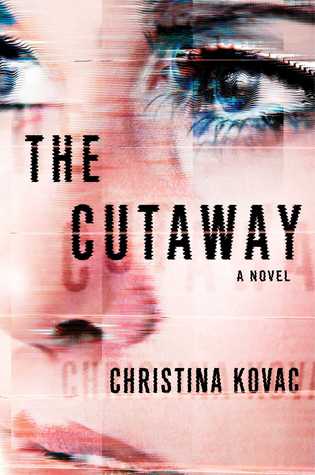
ARC Review: THE CUTAWAY by Christina Kovac #amreading

30753708

Hello, fellow book junkies! A Goodreads friend really liked The Cutaway by Christina Kovac, so I ventured out of my YA zone and, crossing my fingers, requested an ARC on Netgalley. I got a copy (yay!), and totally enjoyed it. 🙂

The Cutaway is a fast-paced, engrossing adult mystery whose biggest strengths are its top-notch writing, a noble protagonist, and the many fascinating insights Kovac (a career journalist) shares about the world of television journalism.

The setting is Washington, D.C., known as “The District,” the protagonist Virginia Knightly, a newswoman with a painful past and a near-photographic memory. When a young female lawyer goes missing, Virginia vaguely recalls cutaway footage of the woman from years before. As Virginia pursues the story on this missing person investigation and uncovers why the elusive footage is important, she enters dangerous territory, both professionally and personally. But Virginia is not a woman to be trifled with–if anyone can compile a top news story while maintaining her integrity, Virginia will.

Though I guessed the villain’s identity a little earlier than I’d hoped I would, overall, the plot was suspenseful and solidly constructed. I’m definitely open to reading more books by Christina Kovac, and I predict The Cutaway will do well when it comes out in March 2017.

Image result for 4.25 stars

— Eve Messenger

Eleven Ways to Motivate Yourself to Write

Dreaming up stories and watching them come to life on the page is pure magic. It really is. I love being a writer. So why is it that some days facing my manuscript is the hardest thing to do in the world?

Because writing good books is HARD.
lisa-simpson-writing.gifWriting and editing can feel like wading through quicksand. Life’s distractions can pull so hard away from the writing desk that it feels impossible to muster the mental energy to write.
That’s when I pull out the big guns.
Image result for cannon firing gif

When my writing resistance is at its highest, I take out my writing motivation checklist. If I’m lucky, I’ll only need to do a couple of items before I feel pumped enough to write. Other times–when writing-resistant inner me throws a particularly nasty tantrum–I might need to hit all ten items on the darn list.

Ultimately, the list helps me overcome resistance to writing. Maybe it will help you, too. And if you’ve discovered other effective ways to motivate yourself to write, I’d love to hear about them in the comments! 🙂 — Eve Messenger

***************

CHECKLIST FOR MOTIVATING YOURSELF TO WRITE
by Eve Messenger

#1 Breathe.
So simple yet so effective. You’d be amazed how much the simple act of focused breathing can perk you up to write.

#2 Get your energy up.
-Listen to a song that gets you pumped.
-Do jumping jacks.
-Flap your hands.
-Dance.

#3 Make sure your physical needs are met–hunger, thirst, room temperature, etc.
I’ll admit, sometimes I’m not that self-aware. I might think I’m resisting writing but am actually hungry, so I grab a quick bite and then I’m good to go.

#4 Acknowledge your emotions.
We’re writers; we get down about things, but we can’t let that hold us back from our dreams. If emotions are dragging you down, acknowledge them, call a friend for a quick “attagirl,” then move on.

#5 Set a specific time to write.
Make sure it’s a block of time that works reasonably within your schedule. When the clock strikes that hour, sit your bottom down in a chair and write. No matter what.

#6 Give yourself a goal to work toward.
For example:
-write 500 words
-edit for one hour
-edit X number of manuscript pages.

#7 Promise yourself a reward.
A bowl of ice cream, a nap, Netflix (and chill?), a new pair of shoes, even a sticker will do. Give yourself something special to look forward to after you’ve tackled your writing goal.

#8 Reassure yourself it’s okay to write badly.
As John Greene puts it: “I give myself permission to suck.” What a freeing notion! Even if your first pass at a daunting writing task turns out to be weak, at least you’ve managed it, and more often than not, your efforts won’t turn out badly at all.

#9 “Sprint it out.”
Tell yourself all you have to do is blaze through as many words as you can during a five-minute word sprint.  Even if all you get out are those words, you’ve accomplished writing for the day. More often than not, you’ll find that once the momentum has started, more writing will come.

#10 Block distractions. 
-Block social media.
-Shut off your cell phone.
-Turn off the TV.
-In a noisy environment, use earplugs or noise blocking headphones.
-If your home is one big distraction (AKA kids, chores, bills), get thee to a library or coffee shop. If you can afford it, trains are a super fun place to write. Writing in different locales reduces distractions and can add adventure to the writing process.

#11 Visualize your ultimate goal.
If your passion is to get your stories out into the world, then visualize fans tweeting and emailing to say how much they enjoy your writing. If your dream is to have a successful writing career, see yourself as a successful, published author. Remind yourself you’re worthy of happiness and success. Say your affirmation out loud. Then sidle up to that computer and write your dreams into reality.

Happy writing!

Eve Messenger

***********

It’s Raining Books, Hallelujah!

Hi, fellow book junkies! What a great feeling it is when a bunch of great books suddenly come raining in. By mail, library, and Netgalley, all of the following books arrived this week, and I’m like a kid in a candy store gazing gleefully at the pretty stack they make on my nightstand.  😀

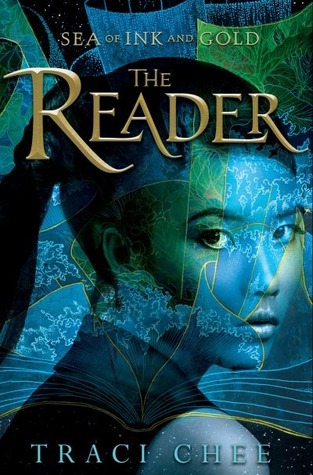
The Reader by Traci Chee –Lushly told YA fantasy about a girl living in a world where reading is forbidden. Read an excerpt here.

25064648

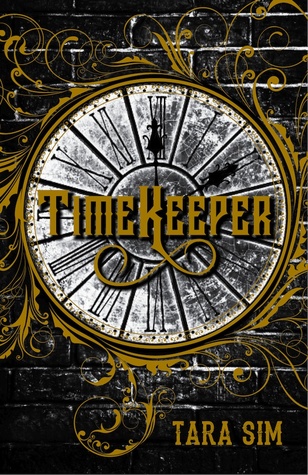
Timekeeper by Tara Sim Netgalley ARC – Gay clocktower mechanic boy. Magic clock mysteriously missing 2 o’clock. I’ve had my eye on this book since hearing about it almost a year ago, and I’m so grateful to have been approved for the ARC.

25760792

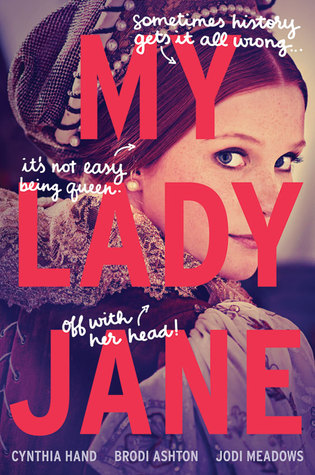
My Lady Jane by Hand, Ashton, & Meadows –This lighthearted historical YA novel apparently gets a bit experimental (or maybe just plain cheeky?) The authors occasional break the fourth wall and have their Victorian characters lapse into 21st century slang. I’m intrigued.

22840421

The Lie Tree by Frances Hardinge – Blogger friends tell me the writing in this is so good. Then when Cover2Cover Mom mentioned The Lie Tree also has a dark edge, I ran right out and got it. Oh, and then the librarian told me it won some kind of award. Bonus.

26118377

Prodigy (Legend #2) by Marie Lu – Legend was such a fun read that I had to find out what Day and June get up to in the next book, Prodigy. A prodigal investigator vs. a prodigal criminal–June and Day’s dynamic is incredible.

13414446

Currently reading:

Accident Season by Moira Fowley-Doyle. Eloquent prose–check. Pleasant Irish setting–check. Intriguing plot idea–check. However, the story doesn’t really catch fire until around page 160. I hear there’s a good plot twist, so I’m hanging in there.

Last but not least. . .

Dear book-loving friend, for taking the time to read all the way down to the end of this post, here is a little treat for you. (Remember to replace the word “men” with “books.”)  XOXO Eve Messenger

How to Tell If You’re a Book Junkie II

Image result for person buried in books

Directions: Mark an ‘x’ for each statement that applies to you.

[ ] 1. I have dropped a book on my face. More than once.

[ ] 2. On social media, I follow writers, not singers and movie stars.

[ ] 3. “Unputdownable” IS a word.

[ ] 4. My idea of a great weekend is starting a new book.

[ ] 5. My fingers type “Google” into the web address bar but somehow I keeping winding up at Goodreads.

[ ] 6. If I leave the house without a book I feel naked   I have a mini-panic attack. I never leave the house without a book.

[ ] 7. I freely admit I’ve hugged, kissed and/or lovingly patted a book.

[ ] 8. My favorite thing in my wallet is my library card.

[ ] 9. I plan road trips just to listen to audio books.

[ ] 10. While reading a book I am oblivious to the outside world. People can shout my name, gesture rudely, but short of bodily injury, I will not notice them.

[ ] 11. I’m happy if there’s a long wait at the mechanic/doctor’s office/airport because it means I get to read.

[ ] 12. When putting together a travel checklist, my first item is always: “books to read.”

[ ] 13. While standing in line to buy a new book I am. . . reading a book.

If you answered “yes” to any of the items on this checklist you are officially a book junkie. For further confirmation, try this test too: “How to Tell if You’re a Book Junkie.

Happy reading!

–Eve Messenger

Library-Hopping Adventure #3 #amreading #amwriting


Why I Like Writing in Libraries:

  • They’re libraries, as in churches of books.
  • They’re free. No obligation to buy coffee.
  • They’re MUCH quieter than Starbucks.
  • Some are open until as late as 9pm–perfect for evening writing. University libraries have even later hours–much later–often until 2 in the morning. (Thank you, night-owl college students.)
  • For weekend writing, libraries are the best. Most are open on Saturdays, and some even have Sunday hours. Which brings me to this week’s library-hopping adventure: Newport Beach Central Library.

Newport Beach Central Library is huge, a whopping 71,000 sq. ft.–so big I had to use the panorama feature on my camera to photograph the building facade. And again with the palm trees. Are there any libraries in my county without palm trees? Hmm, that’s a question for the next library-hopping adventure. Ext NB Central Library.jpg

The Good

  • This library is open on Sundays.
  • Because I keep the latest versions of my works in progress on Google Docs, I appreciate that Newport Beach Central Library offers a generous five hours of free internet access–with a library card. So, of course, I signed up for a library card. 🙂 In fact, I want to collect a whole DECK of library cards, one for each of the 33 cities in my county, plus the county library  system (which I already have). So far, at three different cities, I’ve been able to sign up for a library card even though I don’t reside in the actual city.
  • Newport Beach Central Library is super quiet. I got in an hour of uninterrupted writing, and it was very peaceful.

The Good & Bad

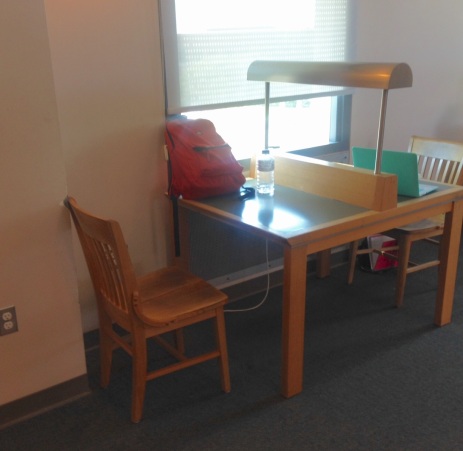
Newport Beach Central Library has tons and tons and tons of seating. . . none of it the least bit inviting. And I wished I had a cushion for the hard wooden chair.

Study Table.jpg

The Bad

  • Not that I should be staring out windows while writing, but it’s worth noting that the view–which you’d think would be amazing since this library is located in a beach town–was not very good, just street traffic and overly landscaped parking lots.
  • At the top of the stairs is a large open area with a credit union and a bistro, which totally had the feel of a mall. Call me old-fashioned, but I like my libraries mall-less.

Random Highlight

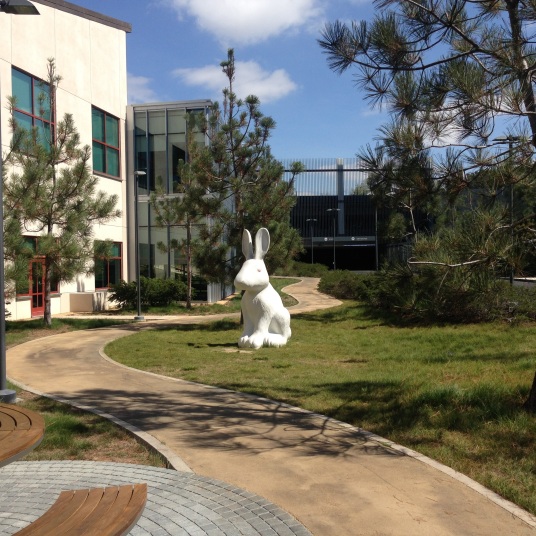
There’s an 8-ft. bunny statue on the lawn. Yes, just sitting out there all by his lonesome, no plaque or anything. No one knows why this is. Maybe the giant bunny is on a library-“hopping” adventure of his own. XD

8 ft rabbit.jpg

–Eve Messenger

Writing a Book is Hard #amwriting

Writing a book is hard. Wait, let me clarify: writing a good book is hard. The thing to remember is that people do it. People actually publish books, good ones–even while working full-time, even while raising families. Publishing a good book is doable and worthwhile. But it takes

A

Lot

Of

Work.

Start Your Book

First you need to come up with a story, something unique that can grab readers (and agents) in an elevator pitch of 15 words or less. Yes, you’ll need to write that elevator pitch and synopsis, but first the book…

You must decide how to start.

If you’re a natural-born plotter and/or smart enough to learn how, you plot your story in great detail before beginning to write the actual book.

On the other hand, if you’re a pantser, your book-writing journey will be much longer. If, like me, the only way you can come up with story ideas is by letting them flow organically while writing, so be it.

In other words, pantsers:

  • write a lot of pages just to get an understanding of the story and characters.
  • Read through all that pre-writing, take notes, plot everything in a way that makes sense.
  • Then write the real first draft.

-You create characters, each with their own quirks, histories, fears, goals, and desires–and conflicts, especially conflicts, both external and internal.

-You write all three acts of your book, yes, all three, even when you reach act two and realize, whoah, a book is big, so super big, way bigger than the original story idea I had. At this point you remind yourself that you are not a bad writer, you are not a bad writer, you are not–that the first draft is always bad. Verify this by reading what all published authors say. (ALL writers say their first drafts are bad.)

-You write all the scenes for your book, all of them, around a hundred. You ensure that each scene has a dramatic arc and an emotional arc and that the pacing is right–not too slow, not too rushed.

-You make sure your book falls within the standard word count for your genre, aware that agents and publishers are more receptive to first books with word counts that fall into the lower range. You remain calm as you logically deduce that the reason publishers prefer shorter books from first-time authors is so they don’t waste as much money on you in case your book bombs.

Revise Your Book

  • You rearrange all the scenes in your novel until the narrative makes sense. You add scenes, delete scenes, and completely rewrite scenes.
  • You make sure dialogue for each and every character is distinctive and packs a punch.
  • You craft your story in such a way that it’s not too ambiguous but also not too on the nose because you’re aware readers like figuring out things on their own.
  • While editing your book, you take multiple passes through it, each time focusing on only one or two elements to avoid becoming mired in an overwhelming mass of details that will make you. . .

Losing mind - businesswoman

Maintain Sanity

Balance is everything. While writing and editing, you maintain your sanity through:

  • social interaction
  • commiserating with fellow writers
  •  physical exercise
  • spiritual whatever.

Work with a Critique Partner (CP)

After you’ve written, revised, and brought out the shine in all elements of your novel, you hand your manuscript over to another person, preferably a critique partner (CP). But first, you must find said CP. This means putting yourself out there on social media, websites, local writers’ groups, workshops, wherever you can find fellow writers/potential CPs who understand your genre and are willing to swap full novel critiques.

You must read other people’s works in progress (WIPs) so they will read yours. It’s a fair exchange, and the time is well spent. When critiquing someone else’s work, not only are you helping out another writer, you are learning a LOT about what makes a manuscript work.

You make more changes to your novel based on CP feedback. 🙂

Work with Beta Readers

You send your manuscript out to beta readers. Again, you need to do the legwork first. Interact with fellow book lovers on blogs, Goodreads, wherever readers of your genre dwell in the wild. When your book is ready, summon the courage to ask those people if they’d like to read and provide feedback on your novel.

Make further revisions to your novel based on beta reader feedback. 🙂

Read, Read, Read

All the while, you read as many published novels as you can, not only because you love to read, but also to gain an understanding of what’s being published in your genre, what the trends are, and to get ideas on what you’d like to strive for and avoid in your own writing.

Research Literary Agents

In between all the writing, editing, and networking, you also research potential literary agents. And they can’t be just any agents. They must be agents who: represent the kinds of books you write, are good at what they do, are open to queries. Which means:

  • Every time you pick up a novel, you read the acknowledgment page (often it’s the first page you turn to), keeping an eye out for agent shout-outs.
  • You visit promising literary agents’ Twitter accounts and blogs, agency websites, and check out their #MSWL (manuscript wish lists). And you do web searches for their interviews to ensure they’re looking for what you’re writing.
  • You create a free account on querytracker.net to check out what other querying writers are saying about agents you’re interested in.
  • You study agents’ submission guidelines and follow them to a T, fully aware (without letting it freak you out) that literary agents are so inundated they’ll look for any reason to reduce their submission load. This means that every detail of the query letter, email, manuscript format, synopsis, etc. that you send prospective agents must exactly conform to their specifications.

Network with Other Writers

You make friends in the writing community who will console you when you’re overwhelmed with how hard it is to write a book, especially when you need to write a synopsis, which means summing up your entire novel up in 1-5 pages. That is really hard.

Follow Your Favorite Authors (not required but, oh, so fun)

Another thing you’re probably doing—though not specifically required—is daydreaming and getting ideas for your own writing career by following your favorite authors; seeing what they’re up to on their blog and tumblr, Twitter, Instagram, SnapChat, Pinterest,Vine, Goodreads, Facebook, maybe even meeting them at book signings (a thrill every writer and reader should experience).

Maintain an Online Presence

While writing, revising, networking, reading,and researching agents, you also maintain your own blog and social media accounts, hoping that by developing an online presence as an author you’ll look legit to future agents, publishers, and fans.

Whew, good luck. Write and publish that book!

–Eve Messenger


The Winner’s Curse & the Traveler’s Blessing

Hello, fellow book junkies!

This week, with books in tow, I road-tripped through the American Southwest. As a hiker, I’ve always been most drawn to lush forests, but I can honestly say I now have an appreciation for the grand, mystical, majestic beauty of the desert.

At Zion National Park in southern Utah I got to walk under my first waterfall, something I have always wanted to do. In this picture, a poor hiker is scooting around me, probably thinking, “Get out of the way, weird lady,” but I had to stop and take it all in. Standing beneath Emerald Pools Waterfall, I was so thrilled I cried. Can you see the waterfall hitting the back of my hand?

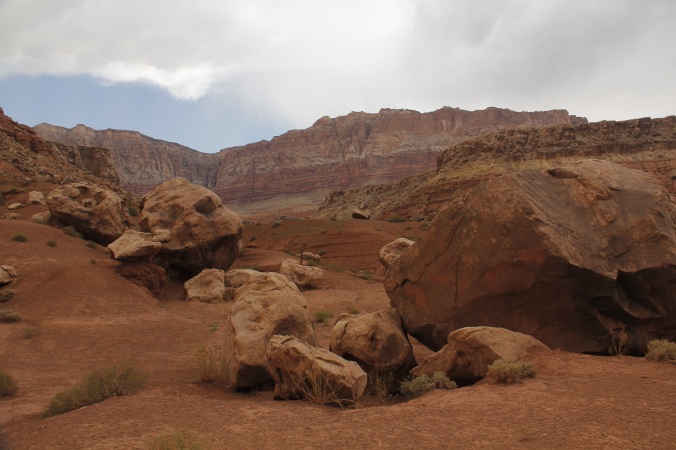
In Northern Arizona, iron-rich red rocks and distant horizons in every–I mean every– direction made me feel as if I was on Mars. The largest boulders in this picture are four times bigger than my car.

Desert Road Trip Aug 2016 - Cave Dwellers Arizona or Mars

Photo by Mr. Eve Messenger

Traveling through Navajo country, I developed an addiction to fry bread, which is used for sandwiches and tacos (and probably other things), but my absolute favorite was fry bread hot and fresh out of the oven, drizzled with honey and sprinkled with powdered sugar.

Desert Road Trip Aug 2016 - Indian Fry Bread

And here’s the book I read in my hotel room each night. I had no idea The Winner’s Curse would be such a page-turner, but it really was, and Kestrel and Arin’s forbidden love story hooked me so hard. Marie Rutkoski’s book has everything. I cannot recommend it highly enough.

16069030

Happy reading and safe travels.

XOXO,

Eve Messenger

What’s Your Favorite Kind of Bookmark? #amreading

Hello, fellow book junkies! I popped into my blog today to spark a bit of discussion about bookmarks.

One of my favorite types of bookmarks are the homemade kind. A friend of mine drew an amazing bookmark for herself. It’s folded into four panels. On each panel is a Pegasus representing each of the four elements so, for instance, the Pegasus of fire has flames rising from its wings, etc. I covet that bookmark so much. I’ve dropped hints but. . .

If I were a better artist, I’d probably make myself a four-fold bookmark of Kell from ADSOM wearing each of four different coats.

Then again, I lose bookmarks like cuh-razy, so I’m probably better off not investing too much time and money into them. Still, it’s fun to have pretty and unique bookmarks to choose from. Lately the bookmarks I use the most include:

  • the bookmark I bought from a local museum–I would show you a picture of it but, I kid you not, I can’t find it right now. That’s how bookmarks and I roll.
  • whatever slips of paper are randomly lying around when I decide to close my book.

What kinds of bookmarks do you like to use? Do you receive lots of bookmarks as gifts? Are you one of those people who never needs a bookmark because you can always remember what page you left off on?