What Makes a Character Likable?

Lately, I’ve run across way too many YA book reviews that decry the extreme unlikability of main characters. Are writers making their protagonists too unlikable? Sure, writing an engaging main character is a complex process–we like our protagonists flawed and thus more interesting, but isn’t it also important for them to be likable enough to root for through an entire novel?

With fictional characters–as with real people–“engaging” and “likable” are subjective, to be sure. In Paula Hawkins’ The Girl on the Train, for example, some readers find the protagonist Rachel so incredibly flawed that she’s just too pitiful to root for; others, like me, find her compelling and sympathetic in her way. The truth is, no characters in The Girl on the Train are heroic in a classic sense, but the story still works. That’s just good writing, so kudos to Paula Hawkins.

So…what makes a character likable? Here’s my list. Tell me if I missed anything.

What Makes a Character Likable?

1. Must feel extremely passionate about something.
2. Has at least one person she’s willing to fight for.
3. Isn’t too perfect.
4. Has a troubled life.
5. Isn’t overly whiny about her troubled life.
6. Has a special talent, skill, or exceptional personality trait.
7. Sees the world in a unique way.
8. Is aware of her own flaws and grows or changes in some way. (added by blogger eclecticscribblings)
9. BONUS: Has a sense of humor, especially about herself. (added by blogger Aedifice)

In other news, I’m falling madly in love with my latest work in progress, a contemporary YA with time travel and a ghost. Had to share. 🙂

— Eve

10 Favorite Questions for Writers and Readers

Still life with pomegranrte and tea

Literature lovers, come on in and try your hand at answering any or all of these fun questions about writing and reading. Here’s a cup of tea to sip on while you consider your answers. (Your favorite kind of tea? What a coincidence.)

1. What’s your favorite book cover?

2. Do you read books more than once? Which ones?

3. What’s the scariest thing about writing?

4. What is the most amazing thing about writing?

5. Where is your favorite place to write? To read?

6. When’s your best time of day to write? Why?

7. What are some of your favorite words?

8. What’s one thing that would tell you you’ve “made it” as a writer?

9. In terms of writing or reading, what’s the best thing anyone could say to you right now?

10. Insert your own question here and then please answer it (because I couldn’t think of a tenth question).

11. Have you ever been published? Where? (I did come up with a tenth question, oh well.)

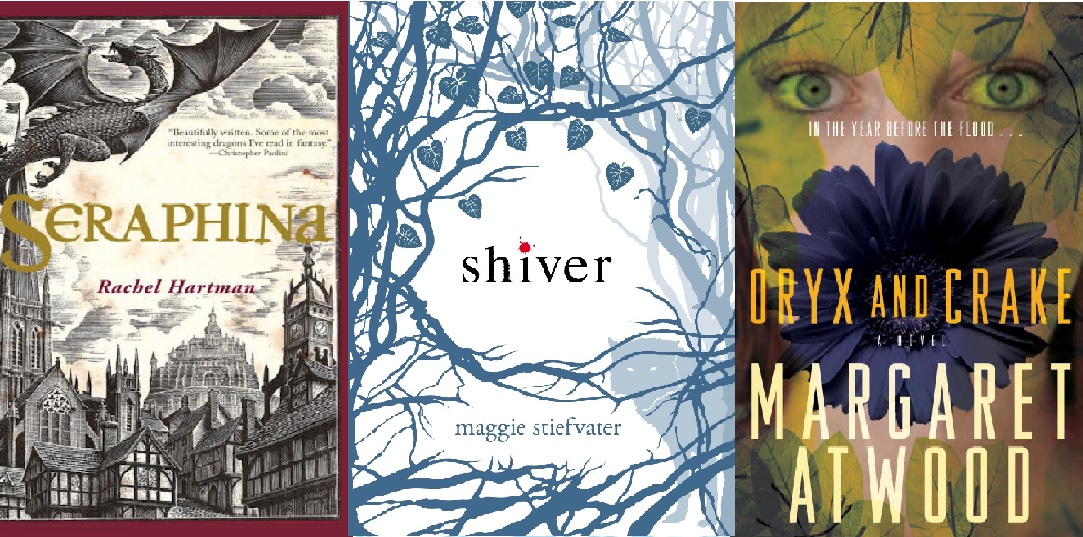
Three Books. Which Should I Read First?

Three Books - Which One First

My first mistake was to get, not one, not two, but three delicious novels all on the same day.  Each has exactly the kind of lyrical, sweep-me-off-my-feet writing I’m in the mood for. Each features a fabulous opening passage and is highly recommended.

Now for my quandary:  Which novel do I read first? Fellow bibliophiles, you haven’t steered me wrong yet.  The nominees for first book to read are:

Shiver by Maggie Stiefvater – Though I’m not usually a reader of werewolf stories, Stiefvater’s artsy tweets tipped me over the edge.

Seraphina by Rachel Hartman – I’ve read so many fabulous reviews of this book, just had to get it.

Oryx and Crake by Margaret Atwood – Can you believe I’ve never read a Margaret Atwood book? Not even the Handmaiden’s Tale. It was time.

Yay!!! First Day of Summer VayKay!!!

joy

As of 3 o’clock yesterday afternoon, thirty-seven unfettered, glorious days of doing whatever I want popped up and smiled at me like a goofy toddler. For the whole month of August I get to read all the books I want, write whenever and for as long as I want, sleep in, exercise(?), spend time with family and friends, and catch up on. . . everything!

You don’t think my to-do list for the first day of summer break is that bookworm-ish…do you? 😉

  1. Make to-do list for first day of summer break.
  2. Play with dogs.
  3.  Brew tea, continue rewrite of YA fantasy, act III.
  4. Think about going for a walk.
  5. Figure out genre of the next book I’m planning.
  6. Research more literary agents who might be a good match for my YA fantasy.
  7. Finish reading Tahereh Mafi novel.
  8. Make a run to the library – whoop whoop.
  9. Hang with the fam.
  10. SUGGESTIONS??? _________________________

I Want to Sell Books, but I Won’t Sell My Soul

dollar sign eyes

Something unusual happened when I served jury duty a while back, not just that I was excited about it. I struck up a sort of friendship with a fellow juror — I don’t recall her name, so we’ll call her Ann.  She was very different from me, worked as an accountant, was years older, married, with children, while I was still years from all that.

Despite the differences, Ann and I were conversational, conspiratorial.  She was friendly, albeit a little aloof. I was flattered, I guess, that she seemed interested in what I had to say. She was smart, well-spoken, dressed in expensive clothing and nice shoes – I didn’t recognize the brands, just that they weren’t from Payless or Target. When the trial was over, Ann invited me to a gathering at her house. Vague, just a “gathering.” I didn’t want to be rude and ask what kind of gathering, opting to chalk it up to that’s how rich, white working moms invite people over.

So I drove to Ann’s house, which was lovely.  And large. At 4, 000 square feet her home was nearly 10 times larger than the apartment I lived in. Clean, new, not-thrift-store-bought furniture, a sunken living room. Ann met me at the door wearing only a smile.

Just kidding.  Wanted to see if you were still paying attention.

Actually, Ann was dressed fine, sort of business casual. She led me from the foyer, through the sunken living room, back to a large den where twenty or so people of all ages milled about. A few light snacks were laid out on a dining table, and there were – I don’t know – packages of things, boxes, pamphlets. The event had an unusual vibe. The other guests weren’t unfriendly, but it all sort of reminded me of when I was nine years old in small-town Virginia and had just started Majorettes (remember baton twirling?).  The girls and our moms had all gathered at the coach’s house for our first meeting.  None of us really knew each other yet. Ann’s “gathering” kind of felt like that.

Then Ann started pitching Amway products.

Amway, the pyramid scheme multi-level marketing company in which sellers at the top get a cut of everything sold by people under them. The more sellers you recruit the more money you make. Simple as that.

I was a mark.

I’m slow sometimes, but I get there eventually, as my friend Marcia would say. I now saw the gleam in Ann’s eyes, the dollar signs. Her invitation had nothing to do with friendship or a desire to chat about our shared jury duty experience. Ann had seen nothing special in me. Feeling foolish and betrayed, I left.

A couple of months later, would you believe, this super cute guy asked me out to a “friendly gathering.” “What kind of gathering?” Vague response. I pressed. “I’m doing well with this business networking thing (or whatever euphemism the cult members employees had for it at the time).  Maybe you’d like to check it out with me.” Sorry, cute guy, Amway is not my idea of a good first date. Next.

It’s easy to recall those memories when now, as an aspiring author, waves of advice crash all around me to promote, promote, promote. Start even before your book is sold, the blogs and tweets and writers’ magazines say. Show agents and publishers you know how to work the ‘net, that you’re the queen of social media, that you’ll be able to promote your book when it’s published. I get it;  if you have no audience then you may as well not have a book.  But what the advice-givers don’t mention is that this whole networking, community-building process could easily turn us into a bunch of Anns.

The artist’s lament? Sure.  I want to sell books, but I won’t sell my soul.  I love communicating with people in the online writing and reading community, sharing insights, fears, successes, and passion for literature.  I don’t ever want to lose that.  If, in this blog of mine, you ever see me mutating into an Ann, please, dear reader, slap me upside the head (in writing, please). Thank you.

EBM

P.S. If your name is Ann, I’m sorry I just tarnished it.  I actually really like the name.

My Name is Eve, and I am a Recovering ‘Pantser’

pantsing

I’m one of those writers you might call a ‘pantser,’ you know, the kind who writes a novel with reckless abandon — sans plot outline — until I reach the semblance of an ending.

It’s fun! It’s exciting! It’s FRESH.  And I’m afraid if I don’t write like that I’ll overcensor myself , or worse, get bored because I already know what’s going to happen.

But.

Revising a pants-style, mutant pit first draft of a novel takes a really, really, really, really long time.  I’m not saying I’ll never pants a novel again, but I’ve done it twice now, and the first novel was such a complicated mess I had to stick it in a drawer until I became “a good enough writer to tackle such a complicated plot.”

This second full-length novel, a YA fantasy, I’ve been revising for dozens and dozens and dozens of hours…reordering scenes, consolidating bits I had epiphanies about later in the writing, just, you know … Clean-up on aisle seven…and twelve…and one…and fourteen.  Clean up the whole damn store.

But hey, writing and revising a novel should take as long as it needs to, right?  And who’s to say I would ever have been able to come up with the cool, out-there things that happen in this story (don’t mean to brag, just sayin’) if I had NOT let my imagination flow 100% unhindered, not even by a plot outline?

But.

I’m not as young as I used to be (I’ll admit) and have a lot of stories I want to write. So many.

Yet here I am, dozens and dozens and dozens of hours into revising and fleshing out this first draft into a flow, a scene order, that tells a cohesive story.  Yes, there is light at the end of the tunnel — I’m three-quarters of the way through — but I’m not even talking about all the fun edit-y things like crisping up dialogue, bringing out sensory details, polishing prose.  I’m talking about just getting the first draft into an order that makes sense.

Outlining would have been so much easier.  More importantly, it would have been FASTER.

Then this morning a lovely thing happened.  A brand new character, with a brand new story, in a brand new genre (still YA), danced herself right onto my computer screen.  And she brought a LOT of her story’s plot with her.  God bless her.  When I’m done with this YA fantasy, I might just be able to write a novel using a proper outline.

HALLELULAH.

Now if I just knew the best way to outline a novel.  Any suggestions?

–Eve Messenger

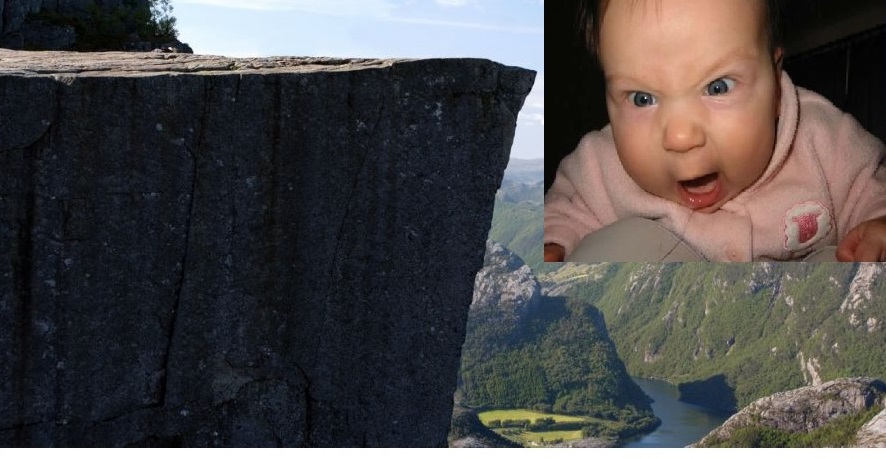
Just Say No to Cliffhangers

Angry about cliffhangers

I hate cliffhangers.  There, I said it.  I don’t mean cliffhangers in the middle of a story, of course — those are great.  I mean a cliffhanger ending to a novel — it’s a cheat, a crutch, a convenient device.  Inherent in every novel there’s a silent contract between writer and reader, included in which is a proper ending!  What should drive readers to want to read the next book is compelling characters and great writing, not — I repeat — a cliffhanger ending.