The Girl with All the Gifts – Black Characters Matter


19418277

Hello, fellow book junkies! Now that I’m on summer break, I’ve been going like gangbusters with writing and editing three YA novels. One of my projects is a YA fantasy about a girl who can vanish into shadows and longs to see the world but can’t because her family keeps to themselves. Then she learns the shocking reason why.

I recently made a big change in the second draft of that story. It was originally set in the distant past, but I switched it to a couple of hundred years in the future, and now it’s working much better and has an interesting new vibe. I likely got the idea for the time switch from two books I’ve read recently/am reading: Ready Player One and The Girl With All the Gifts, the latter being an adult zombie story with a POV that blew my mind.  (Beware, it gets scary as sh*t.)

The movie version of The Girl With All the Gifts hit UK theaters this week (maybe the US too, but I can’t seem to find it). As a reader who fell head over heals for the character Ms. Justineau, imagine my dismay when I discovered how the producers decided to cast her role.

In the book, Ms. Justineau is depicted as a 40s-ish dark-skinned black woman, in my imagination, kind of like Teyonah Parris:

In the movie, this is how the producers cast her:

Gemma-Arterton02.jpg

?!!? I mean, come on. Nothing against Gemma Arterton, who’s probably a fine actress and certainly is lovely but, well, she’s 30 and so white. Honestly, I felt betrayed and sad, as if the fictional 40-year-old black Ms. Justineau  I adored has been erased.

Other notes about casting for this movie: Glen Close was a good choice, I think, to play the sort of mad scientist Dr. Caldwell, and it seems the movie producers decided to try and balance the color scales by casting the little girl Melanie, who in the book is white, with a black actress.

Okay, but . . .

Ms. . .

Justineau. . .

— Eve Messenger


The Surprise Star of the 8 Books I Read in March was. . .

March Reads 2016 copy

Oh, look at all the literary worlds I got to visit in March.

Only a Hundred Pages Shorter than Moby-Dick
At 565 pages, The Casquette Girls by Alys Arden was my longest read of the month, with A Gathering of Shadows coming in second at 500 pages. The Casquette Girls was one of those books that had me scratching my head wondering why it kept me so engrossed. I think the biggest reason is that the paranormal characters and events were interwoven with the enchanting, extraordinary world of New Orleans. 4 stars

Transported to a Dream then Sparked with a New ObsessionTsukiko from The Night Circus by CaylaLydon
With tThe Night Circus, Erin Morgenstern transported me to a dream world of magic, a battle to the death, and compelling characters, including my new favorite, Claire Bowen. This book also left me with a dire need for a prequel featuring Tsukiko and Hinata. If you read the  book, hopefully you’ll understand. The Night Circus was published in 2011 as the first in a series, but Erin Morgenstern is still working on the sequel because, apparently, writing this beautiful takes time. 4.5 stars

What’s a Story Without Believable Motives?
The Girl Who Ignored Ghosts by K.C. Tansley
There’s a lot to like about The Girl Who Ignored Ghosts. Of course, there are ghosts, and a girl who can see them, then there’s possession and a sort of time travel with an ancient curse. The biggest issue for me was believability–there wasn’t a compelling enough reason for the protagonist to risk everything to embark on her dangerous journey. Perhaps for that reason, The Girl Who Ignored Ghosts did not pass my “skim test,” meaning I found myself speed-reading through numerous passages that didn’t further the story.  3 stars

Why Friends Don’t Let Friends Write Alone
Beta read-Adult Paranormal WIP by  Tracy L. Jackson
My dear writing friend Tracy calmly talks me down from writing ledges, fangirls with me over The Walking Dead each week, and now has entrusted me to offer honest feedback on her wonderful work in progress, an adult paranormal novel. Since it’s not published yet, I won’t reveal much except to say there are MANY characters to fall in love with, plus an intriguing curse and, again, the amazing city of New Orleans. I want to read more books set in New Orleans! If you have any to recommend, I’d love to hear.

Why I am No Longer a Cassandra-Clare-Book Virgin
Clockwork Angel by Cassandra Clare
At last, I read my first Cassandra Clare book. Clockwork Angel was darker than I’d expected, which was a nice surprise. And the characters–Tessa, Jessamine and, oh, I’m enraptured by Jem. I saw certain plot twists coming from a mile away, but that didn’t stop me from enjoying this book and wanting to read more in the series. 4 stars.

Schwab, You Got Me to Read Your Second Book
A Gathering of Shadows by V.E. Schwab
I loved, adored, was blown away by the masterful writing of A Darker Shade of Magic, so I had to read the second book, A Gathering of Shadows. Amazing new characters were introduced, notably Alucard and Ojka. Plus, the Element Games were super fun, and Lila still kicks butt. But I enjoyed the first book more, probably because I’m a “discovery” reader, meaning I get the most pleasure out of discovering new worlds, characters, and writers, and it takes a LOT for me to spend more time in a literary world I’ve already experienced. 4.5 stars

Surprise Star of the Month
Pivot Point by Kasie West
I knew I wanted to check out Kasie West’s writing at some point, but Pivot Point wasn’t even on my radar until, on a whim, I picked it up from the library. I’m so glad I did. It was one of those “exactly what I was in the mood for” books. The plot kept me guessing all the way through, and the unique story structure made for a fascinating read. I’m all in for the next book in the series, Split Second. 4.5 stars

The Challenge of Sustaining Magnificence
All the Bright Places by Jennifer Niven
At a hundred pages in, I was completely enamored by this beautiful, achingly bittersweet story. Through the second act, the story got a little same-y and could have used a twist, but the writing was strong, and the dual-POV structure worked really well. All the Bright Places is a moving story with deep philosophical themes and memorable main characters. 4 stars

 –Eve Messenger


An Update on My Latest Reads. . .

You know those times when you read a book and you’re upset because it’s not very good but maybe not quite terrible enough to stop reading and you think, “Life is short. I really wish I’d read one of those hundred other promising books on my TBR”? Well, I’m happy to report that NONE of the books I’ve read recently has made me feel that way–thanks to A) all the great books being published and B) excellent recommendations from fellow book lovers.

Recently Read

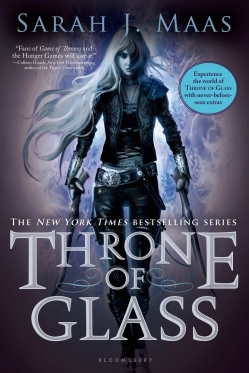
Throne of Glass by Sarah J. Maas

What everyone says is true. Throne of Glass is a great read, and Sarah J. Maas is a brilliant fantasy writer. Calaena the assassin is unforgettable. World-building, yes. Intriguing history and ancestral secrets, yes. I’m especially enamored with the character, Princess Nehemiah of Ellwye, and her friendship with Calaena. (Want to know how to pronounce ‘Ellwye?’ So did I. Note: there’s a pronunciation guide at the back of the book, but I didn’t know about until someone told me after I returned the library book. *sigh*)

Throne of Glass copy

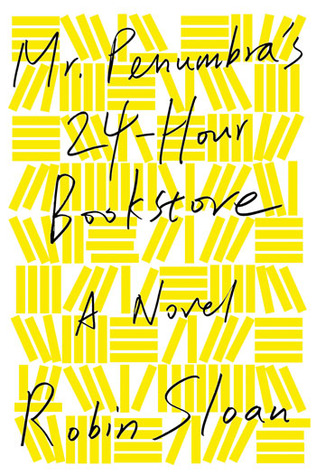
Mr. Penumbra’s 24-Hour Bookstore by Robin Sloan

As much as I adore young adult fiction, sometimes a non-YA book comes along with a concept too intriguing to ignore.  Mr. Penumbra’s 24-Hour Bookstore, for example–I mean, a story set in an old bookstore with a mysterious owner, Mr. Penumbra, watching over ancient texts? Yes! The protagonist is an affable, loyal guy. The story is pleasant and smart, especially with its eye-opening insights into the brain trust that is Google. Worth reading for the unforgettable scene inside a vast, high-tech subterranean vault of lost historical items called “Con-U.”

13538873

Melanie Noell Bernard’s YA dystopian work-in-progress

I won’t reveal much about Melanie’s story because she’s still working on it, but this talented lady is going to be published someday—just watch.

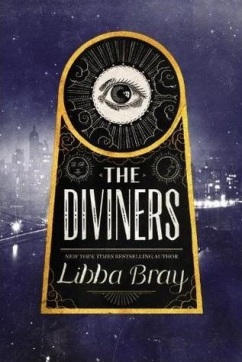
The Diviners by Libba Bray

Thank you to Carolyn @ A Hundred Thousand Stories for recommending The Diviners. Entertaining, scary, and very well-written, the rich 1920s setting took this paranormal YA to a whole other level. Memphis and Theta were, by far, my favorite characters—I hope they have bigger roles in the second book, The Lair of Dreams, which I definitely plan to read. I’m a bit whiny about super long books, so of course I wondered why The Diviners had to be 578 pages long, but the good news is the story never dragged.

the diviners

Currently reading

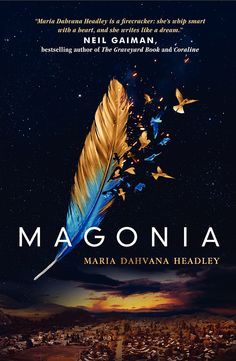
Magonia by Maria Dahvana Headley

Magonia has been on my TBR a while, but Beth @ Betwixt These Pages encouraged me to read it  sooner rather than later.  As I move into the last 2/3 of the book and mind-blowing plot twists are revealed, I totally get why. Kudos to writer Maria Dahvana Headley for her Wild Imagination–yes, those words are capitalized because, well, you have to read the book to find out. I’ll just say that the beginning does not prepare you for what comes.

21393526


–Eve Messenger

How to Weave Plot Threads Without Going Insane

Recently, I’ve had to face the cold, hard fact that I do not write simple plots. Very “not simple” plots, though I will stop short of calling them complicated. In coming to terms with this, my first instinct is to get very, very nervous, as in: how in the hell am I going to weave all these plotlines together into a cohesive story? Sure, the plot makes sense in my head, but piecing it all together on the page is another matter entirely.

So how do I avoid getting tangled up in plot threads?  Since I don’t personally know any professional writers To ask, I turned to my good friend Google for advice.

One of the first things that pops up is “Calendaring Your Story,” an article by writer Mindy Obenhaus. One of the things she says that really pops out at me is that she is “a visual person, not to mention somewhat detail-oriented.” That’s me, too. I am most comfortable processing information visually, so when it comes to plotting a novel, it makes sense to create a visual representation of my plotlines, a timeline that shows all the major plotlines side by side.

But how?

Obenhaus apparently uses a calendar, a large, desk-sized one. Other writers create Word tables or Excel spreadsheets. Still others use flashcards, a different color for each plot thread. And there are surely plenty of other methods crafty writers have come up with for calendaring their plotlines. (If you have any ideas you’d like to share, please feel free to comment.)

Then I remembered that at a company I once worked for we entered departmental events into an online calendar, with each department displayed in a different color, a multi-person event calendar, something like this:

Maybe this could work for calendaring plotlines, thought I.

So I tried it.

  • First, I found a decent online multi-person calendar at TeamUp.com, a free version that allows you to calendar up to ten different people/plotlines.
  • Then I got to have fun deciding which color best represented each of my major characters/plotlines.
  • After that, I started entering major plot points and, right away, the process got me thinking about my novel in new ways. For instance, I realized that my original plan didn’t logically allow enough time between a couple of key events.

Now the “heavy lifting” begins. I’ll need to really think about each major milestone and decide precisely when it should occur so I can put it on a calendar. I KNOW (as hard as I try to resist this) that calendaring my plot lines will make me much less confused than I was with my first two novels. As convoluted as those first drafts were, I’m thinking surely this will be an improvement.

Reading While Writing – Is it a Bad Thing?

NTSNBN

There’s this YA dystopian thriller I’ve been dying to read.  Very hyped, mentioned in lots of blogs, highly ranked on Goodreads. I won’t mention the title because — call me superstitious, or maybe respectful or polite — I won’t publicly write negative things about another writer’s published work. Who knows, maybe you’ll guess it from the references I’m about to make. Anyway, I was excited to read this book, but I stopped myself.  I stopped myself from reading any fiction.  Why? Because I’ve heard from other writers that reading while you write can be detrimental.

But reading is the shizzle!

So two days ago I picked up this hyped novel-that-shall-not-be-named (henceforth known as NTSNBN), and I began to read.   Even though I’m working on my own novel.

And it’s been really helpful!  Possibly because NTSNBN is in a different enough genre from my own YA fantasy adventure. Or maybe because it’s a good book but not so brilliant that I’m utterly intimidated. Or maybe (and probably most significantly) because the plot and characters of my own novel are well-formed enough that reading someone else’s novel — both as a positive and negative example — gives me ideas on how to enhance what I already have.

Back when I was tapping and scribbling out the nucleus of a plot in coffee houses, libraries, and all the other free places writers and homeless people hang out, reading someone else’s novel might have been detrimental to my process. Consciously or subconsciously, another writer’s plots and characters could have crept their way into my own writing.   (Though I probably will take the chance and try it while writing the next novel.)

After two days of reading NTSNBN — while working on the 2nd/3rd major revision of my own — here’s how reading someone else’s novel has been beneficial. Throughout the narrative, NTSNBN gives a very clear sense of the main character’s emotional state. It contains too much a lot of internal self-talk. With a keener awareness of this, the next time I sat down to work on my own book, my characters started spilling their emotional guts a lot more.

I like that.

The author of NTSNBN also employs several quirky stylistic devices, such as replacing number words with the alphanumeric, as in ‘2’ instead of ‘two.’  Also, there are long passages that deliberately avoid commas. Thirdly, there is a lot lot lot of  too much  striking out of lines and words, which signify the MC censoring his/her own thoughts.   Though I probably won’t use those devices in my own writing, the stylistic experiments definitely inspire me to try new things.

Lastly, NTSNBN reads really fast. All the chapters flow really well, each with its own grabber that takes you right into the heart of the scene and an ending that propels you further into the story. All wonderful things to keep in mind while revising and polishing my own work.

E.B.M.